Everything you need to know about recent protests in Iran
And what the anxious reactions from Washington and Tel Aviv reveal
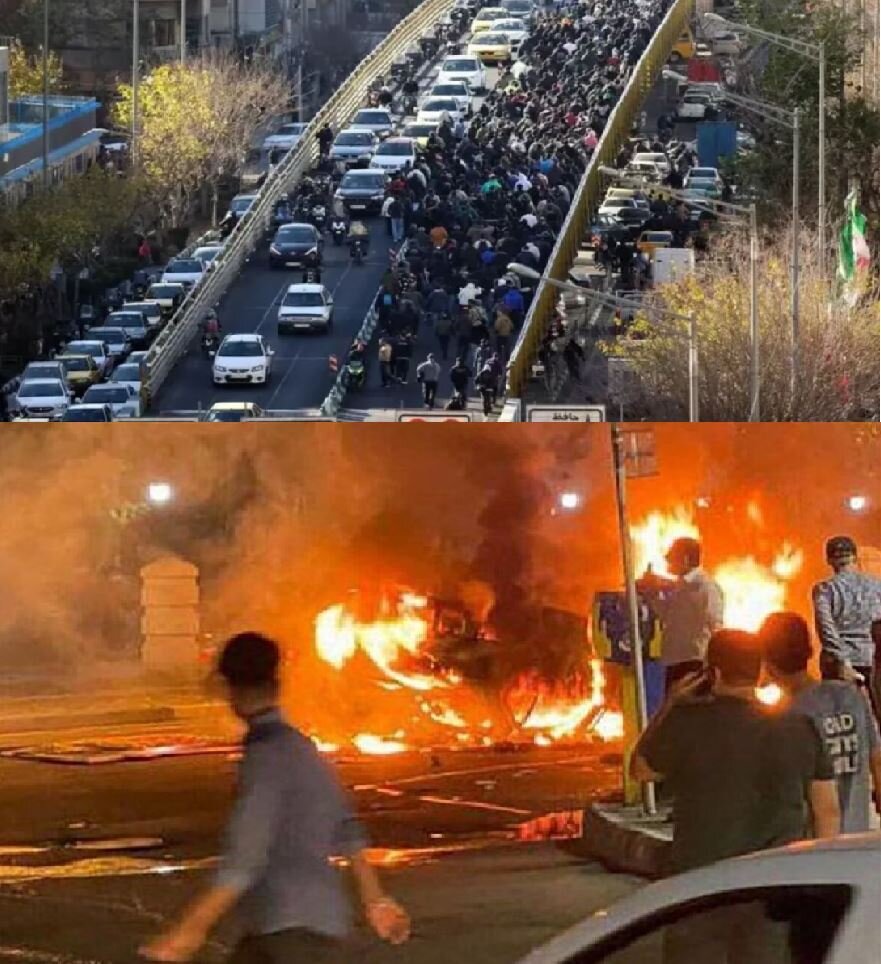
TEHRAN - When protests over currency market volatility first broke out among Iran’s bazaaris last Sunday, the Tehran Times wrote that the peaceful demonstrations could be exploited by the U.S. and Israel—regimes that view protest in Iran not as a healthy sign of a living democracy, but as a tool to overthrow the Islamic Republic.
Sadly, what the Tehran Times predicted has now materialized. Yet it is once again, unlikely that U.S. President Donald Trump and Israeli Prime Minister Benjamin Netanyahu will get what they wish for.
Initial protests and government response
Protests began in Tehran's main bazaars. Business owners shut their stores and moved toward their neighborhoods' main squares to protest the unprecedented fall of the Iranian Rial which had taken place in the mere course of a few weeks. The first two days saw the largest strikes and protests, which seldom escalated into scuffles with police. Isolated videos showed that unknown individuals, mostly women and young men, asked the bazaaris to block streets and vandalize the city. However, they all left and ran away after the business owners rejected them, saying they could not recognize them and asking which stores they belonged to.
On Monday, the head of Iran’s Central Bank was replaced. In the following days, the Iranian Rial regained some value, gold prices dropped considerably, and union leaders across various sectors held talks with the government. By Thursday, activities had largely returned to normal.
President Masoud Pezeshkian and several cabinet members have expressed respect for the protesters’ demands, announcing preparations for new economic measures to further ease tensions.
Armed infiltration
There are still bazaaris protesting peacefully here and there, though in smaller numbers. Their demonstrations have remained orderly, and despite being deployed, anti-riot police have not taken any action against the participants.
But as these legitimate protests have subsided and dialogue between authorities and the people has shown progress, small cells of armed individuals have emerged—primarily in Iran’s western border provinces. These are regions where Israel and the U.S. can more easily smuggle weapons into Iran via Iraq to arm their operatives.
These individuals have engaged in a series of violent and deadly acts: setting fire to citizens' cars parked in the streets, forcing businesses to close through threats and assaults—in one instance killing the owners and in another, destroying the business itself. They have attacked police officers with homemade explosives and attempted to seize police stations and government buildings through armed ambushes. One video from Iran’s western Ilam province showed heavily armed and masked individuals firing shots into the air while chanting death slogans against the country’s leaders, before being neutralized by special forces.
So far, the unrest has resulted in several casualties. At least two security personnel have been killed and 13 others injured. Separately, one rioter died when the explosive he was holding detonated prematurely, before he could throw it at police.
In the southern city of Marvdasht, a fruit seller was killed by armed men after refusing to close his business. In Hamedan province, an elderly man was severely beaten after asking unidentified individuals to stop vandalizing public property; he remains hospitalized in critical condition. His attackers published video of the assault, likely to spread terror and deter other citizens from opposing them. In a similar incident, a middle-aged woman chanting slogans against rioters was beaten by masked assailants.
Small-scale riots continue in a number of western cities, primarily at night. Thus far, police have appeared to avoid using lethal force against the armed individuals, opting instead to arrest them—despite widespread terror in the affected cities. However, Iran's Police Chief, Brigadier General Ahmad-Reza Radan, who is known for having successfully contained massive Western-backed riots twice in the past decades, recently announced that he has ordered police to end their policy of appeasement toward the armed cells. This approach, some analysts say, appears to have only emboldened the gangs.
A 'revolution' taking place on X and Instagram
Meanwhile, a significant disinformation campaign has emerged online. Old videos—such as footage of retired teachers protesting their salaries years ago in Tehran, ordinary pedestrians in Esfahan, and clips from the 2022 unrest—are being repurposed by Persian-language Western media outlets and various accounts belonging to former Iranian actors and actresses now residing in the West. Many of these fabricated videos were overdubbed with audio to falsely depict crowds chanting in support of the deposed Shah’s son—a figure known for backing Israel’s war against Iran in June and for his deep ties to the Zionist regime.
Also, some of the former actors have used their platform on X to call on their young followers to attack police officers, kill them, and seize their weapons for further "operations." Despite numerous reports and the blatant incitement to crime and violence, X has not removed such posts. Having left Iran and now struggling to find work abroad, these individuals appear intent on encouraging destabilizing action against the Iranian government. Some analysts believe they are seeking funding from foreign spy agencies by demonstrating an ability to mobilize youth against the Islamic Republic.
Harassment against business has also occurred online. Iranian online shops—most of which are women-owned private small businesses that expanded significantly after COVID-19—report being harassed on Instagram. Accounts accuse these shops of being "traitors" for operating during what they call a "revolution." An investigation by the Tehran Times found that most of these harassing accounts had zero followers, few or no posts, and profile pictures of random women resembling ordinary citizens.
US and Israel give away involvement, perhaps too soon
American and Israeli officials and entities have struggled to conceal their enthusiasm since the initial protests began, even before armed cells became involved. Their early statements—later criticized by their own analysts as premature and detrimental to winning public support—openly acknowledged efforts by both regimes to exploit the situation.
Among the first to reveal these intentions was Mossad’s Persian-language account on X, which last Sunday urged Iranians to take to the streets, claiming Israel stood with them not only in “spirit or words, but on the ground.” Following the first wave of unrest, commentators on Israeli television described the rioters as “armed, trained, and guided,” openly calling for Israeli assistance to topple Iran’s military and government institutions.
Further exposing the foreign backing, a former Trump administration official—who served as CIA director and Secretary of State—declared on X after the new year that Iran “is in trouble.” He extended New Year’s greetings to the Iranian people, whom he has subjected to severe sanctions, as well as “to every Mossad agent walking beside them…”
Trump himself explicitly endorsed the violent actors, portraying armed individuals who have killed citizens and security forces and destroyed property as “peaceful protesters.” He promised on social media to “come to their rescue” if Iran moved against them, adding, “We are locked and loaded and ready to go.”
Trump’s exceptionally interventionist remarks—unprecedented even for a U.S. president—provoked sharp responses from Iranian authorities, with several warning that American soldiers in the region would be the first to perish should he attempt to act on his threats.
Iranian citizens also reacted, launching the viral hashtag #shutupTrump on X. Many users, including some critical of Iran’s government, rejected what they called the “yellow-haired jackal’s” hypocritical offers of help, pointing to his responsibility for the deaths of over 1,000 Iranians during the U.S.-Israeli military aggression of June 13. That 12-day assault, which occurred in the middle of nuclear negotiations, targeted Iranian infrastructure and killed mostly civilians, along with military personnel and nuclear scientists.
Analysts argue that these overt admissions by American and Israeli figures have backfired. While economic protests garnered public sympathy and the government’s dialogue-based response was welcomed, the shift toward foreign-backed violence has alienated ordinary Iranians. A population historically resistant to foreign intervention has grown increasingly opposed to the armed cells as evidence of U.S. and Israeli involvement mounts. Most Iranians, if asked, express no desire to see their country become “another Libya or Syria” under the guise of Western assistance.
What happens next?
The immediate future likely hinges on two critical factors: the government's economic performance and its security response.
As noted previously, sporadic riots continue, primarily at night and in smaller cities along Iran's western borders. The situation, however, does not exceed the operational challenges that Iran's security and military forces have successfully managed in the past. Increased casualties remain a possibility in the coming days as security forces conduct operations to clear streets and neutralize the armed and trained militants.
On the economic front, the Pezeshkian administration has succeeded in alleviating the immediate grievances of the bazaaris. Nonetheless, it is imperative to address the underlying structural economic frustrations more effectively. Doing so would reduce the likelihood of future protests and, consequently, deny the United States and Israel opportunities to exploit domestic unrest. Needless to say, Washington will continue to undermine the prospects for economic recovery by maintaining and intensifying its sanctions.
Leave a Comment